
Psychodynamic psychotherapy: who it is for and how it works
To understand what keeps repeating in your life and has its roots in the past. See how a session goes, how it differs from psychoanalysis and when to choose this approach.
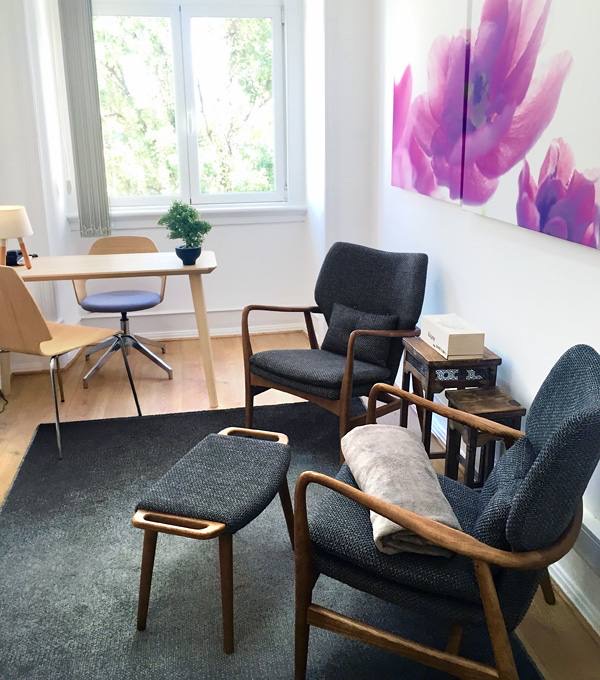
- In person: Saldanha, Lisbon
- Online: Portugal and abroad
- Rooted in psychoanalysis
- Psychologists with an OPP licence
- Originpsychoanalysis, in a more flexible form
- Focuspatterns from the past that repeat today
- Lengthoften shorter than classical psychoanalysis
- ≈ 50 mineach session, in person or online
Who psychodynamic psychotherapy is for
It usually makes sense when you already understand the problem but cannot change it.
Patterns that repeat
Choices, relationships or reactions that keep coming back, without knowing why.
Suffering with no explanation
Symptoms and unease whose origin you cannot find.
A wish to understand yourself
You want to understand your desires, your conflicts and the way you work.
Old experiences
Traumas or past experiences that still weigh on the present.
See EMDR for trauma →What a session is like
More conversation than exercises.
1. You talk about whatever comes to mind
The psychologist listens attentively and asks questions along the way, without telling you what to do.
2. You link the present to the past
You analyse what you say, your relationships and your patterns of behaviour, to understand where they come from.
3. You work towards concrete goals
The therapy is guided by the goals you set together.
4. It adapts to you
It usually lasts less time than classical psychoanalysis, and the pace is adjusted to each person.
Psychodynamic therapy or psychoanalysis?
Psychodynamic therapy grew out of psychoanalysis, but it is more flexible.
Classical psychoanalysis
- Explores the unconscious in depth
- Centres on the analyst's interpretations
- Closer to Freud's ideas
- Is usually longer
Psychodynamic psychotherapy
- Focuses on solving present-day problems
- Keeps the importance of past experiences
- Also draws on other authors, such as Jung, Klein or Winnicott
- Is shorter and adapted to each person
Ideas you will hear in the sessions
You do not need to know them beforehand. The psychologist explains them as the process goes on.
The unconscious
Much of what we feel and do happens without us realising. Once we become aware of it, conflicts are easier to resolve.
Defence mechanisms
Denial, repression, regression or projection: ways of protecting ourselves from what hurts.
Id, ego and superego
Three parts of the mind, in constant conflict, according to Freud's theory.
Stages of development
Our difficulties may have their origin in how we lived through childhood.
Psychodynamic psychotherapy: frequently asked questions
What is psychodynamic psychotherapy?
An approach rooted in psychoanalysis, based on understanding unconscious mental processes and the influence of the past on present life.
How does it differ from psychoanalysis?
It is more flexible in its methods and techniques, more oriented to present-day problems and, as a rule, shorter. It does, however, keep the importance of the unconscious.
And compared with CBT?
CBT works on the relationship between thoughts, emotions and behaviours, in the present. Psychodynamic therapy looks for the origin of the patterns. Many psychologists combine the two.
Is it the same as integrative psychotherapy?
No. Integrative psychotherapy brings together several techniques, such as EMDR and hypnosis, and may include a psychodynamic foundation.
How long does the process take?
It depends on each person and their goals. We talk about this at the first session.
Can I do it online?
Yes, by video call. In-person sessions are also available in central Lisbon.
How much does it cost?
Sessions in English: €90 per session; 5-session package €350 online or €400 in person. ADSE (the Portuguese public-sector health scheme) reimburses 75% of the amount, up to €16 per session. See our fees.
How do I choose between the different approaches?
See psychotherapy in Lisbon and online, where we compare the approaches. At the first session we help you decide.
Sources and recommended reading
Information from health bodies and reference studies, if you would like to read more. It does not replace an assessment by a professional.
Book your first session
Get in touch
Send us a WhatsApp message or an email. We will reply to agree a day and time.
First session
In person in Lisbon or online. We assess your situation and see whether this approach makes sense for you.
Plan and continuity
We agree a regular rhythm, for example weekly. The 5-session packages work out better value.
Book your psychotherapy session
Write to us on WhatsApp and we will agree a day and time, in person in Lisbon or online.
- WhatsApp · Phone +351 936 340 898
- Email jorgeamaropsicovias@gmail.com
- Address Rua Latino Coelho, 87 · 1050-134 Lisboa