
19 November 2026
Sick leave for mental health in Portugal: how it works
Anxiety, depression or burnout can justify sick leave in Portugal. Find out who can sign you off, how to ask for it and where a psychologist fits…

By Jorge Amaro · 10 January 2019 · 22 min read

What follows is Jorge Amaro's account of the argument that led him to look into the subject.
A few days ago I witnessed a rather heated exchange between two “Psis” (the Portuguese shorthand for psychologists, psychotherapists and the like). One said he was a psychotherapist, but the other said no, that he was the one who was. One of them was a psychologist, the other was not.
The non-psychologist considered himself, then, a “true psychotherapist”. And he thought the other person, even though he was a psychologist, could not call himself a psychotherapist.
I confess that it got to me, and I immediately took my fellow psychologist's side, in an essentially emotional way. After all, I also consider myself a psychotherapist as well as a psychologist.
So I decided to do as much research as possible, in a more rational and well-founded way – in case I too should one day suffer an “attack” from someone calling this title of mine into question and not be prepared to defend myself.
Let us see, then, what the “attack” on my fellow psychologist consisted of. It took place on Facebook. More or less from memory, here is my account…
The person who was not a psychologist claimed that he had the right to use the title of psychotherapist because, abroad, specifically in the United Kingdom, he had studied medicine and obtained a degree in psychoanalysis.
He also said that, in that degree in psychoanalysis, he had spent two years observing babies and, in the four years of the rest of the course, had undergone “personal psychotherapy”. On top of all that, he had completed a “specialist master's degree”.
So he really was a psychotherapist! And only that: he was only a psychotherapist.
He also stated, by way of accusation against my fellow psychologist, that he could not “usurp” the title of engineer, teacher or architect just because he felt like it. So he questioned my colleague on why he called himself a psychotherapist…
My fellow psychologist defended himself, arguing: that he had a five-year postgraduate course with a specialisation in Psychotherapy with Adults, through the Portuguese Association of Integrative Cognitive Behavioural Therapy (Associação Portuguesa de Terapia Cognitivo Comportamental Integrativa, APTCCI); that he had done a specialisation in Bioenergetic Analysis Psychotherapy, also lasting five years, through the Catalan Association of Bioenergetic Analysis; and that, for his work, the OPP had already recognised him with the grade of specialist in Psychotherapy.
He said that, in this way, he hoped to have answered the question put by the non-psychologist with the degree in psychoanalysis.
However, he was mistaken, because the “psychotherapist with a degree in psychoanalysis” hit back: that no, there it was, “Cognitive Behavioural Therapy”…; that, therefore, “Therapy” was the correct name, the official name…; that, then, at most he would be only a “Therapist” and not a “Psychotherapist”…; that, as for “bioenergetic analysis”, he could not comment and, without my being sure whether he said it in jest or not, he offered his congratulations…
The self-styled “true psychotherapist” really did not stop there, and went on: “That is not for the Ordem to decide, although it does so, I know… but who is the Ordem dos Psicólogos Portugueses, what entity is that, that thinks it can award such a title?…”
Straight afterwards he put the question: “Do you know who can award the title of psychotherapist? Do you?…”
He was quick to give a very firm answer: “The title of psychotherapist can only be awarded by the competent Societies!” And do you know which they are? In Portugal there are three: the Association for Psychoanalysis and Psychoanalytic Psychotherapy, the Portuguese Society of Psychoanalysis and a small one called Relational.”
By this point in the exchange, I suppose, my fellow psychologist must have been completely disconcerted, and decided to call on, in his defence, the former Bastonário (president) of the OPP, one of the founders of the Portuguese Association of Cognitive Behavioural Therapy…
He even quoted a text written by the former head of the OPP. I retained the following: the APTCCI is an association of professionals with the aim of training psychotherapists; it aims to promote Behavioural, Cognitive and Integrative Therapy; it has more than 30 years of history; it has a body of trainers of recognised merit and experience; whoever completes its training gains knowledge, skills and experience in ways recognised nationally and in line with international parameters – and becomes part of a community of psychotherapists spread throughout the country.
But the “psychotherapist” really did not leave it there and retorted once more: “What you are, when you train at that APTCCI, is therapists and not psychotherapists!”
Now, this question of the difference between therapists and psychotherapists was something I had already seen touched on, a few times, by people connected to the world of psychologies and psychotherapies: that there was a difference…
I confess I never paid much attention to it because to me the matter is clear: “therapist” has a broad sense; it can include psychotherapists, but also those who practise acupuncture, herbal medicine, hypnotherapy, colour therapy, massage therapy, in short, therapy of anything…
Psychotherapy, on the other hand, while it may follow various approaches, methods and techniques, works in the area of people's psychological well-being. It is easy to see that “therapy” comes from the Greek, meaning the act of caring for or treating – so, treating something. But put the prefix in front and we have the act of treating the psyche, the mind, thoughts, emotions, in short everything to do with the psychological field.
While I was mulling over these doubts, the “psychotherapist” reiterated: “So what you psychologists are, after doing that postgraduate course at the APTCCI… what you are is behavioural therapists!”
At one point he said that in England there was a body of its own for psychotherapists: “The profession of psychotherapist is practised only by psychotherapists with their own professional body, with specific training, either in psychoanalysis or in psychoanalytic psychotherapy.”
So I went to investigate and I was genuinely surprised, because there may indeed be a fundamental distinction between psychologist and psychotherapist, both in training and in practice. That is, the psychologist will work in various fields: educational, forensic, health, occupational, research, clinical and counselling. Then the clinical psychologist will work with assessments and the prescription of brief, focused treatment of the cognitive-behavioural type.
The psychotherapist, on the other hand, will be quite a different professional figure, with the particularity of practising only a more psychodynamic type of psychotherapy.
In fact, in the United Kingdom, as around the world, there are various currents of psychology, various types of training, various psychotherapeutic currents and approaches, but in that country psychotherapy will really be of a psychodynamic nature, and longer…
And, from what I was able to gather, there is not just one organisation regulating the profession. There are several, it seems. One of them is the UKCP (United Kingdom Council for Psychotherapy), which regulates psychotherapy in the United Kingdom.
There is also the BACP (British Association for Counselling and Psychotherapy). With this one, after joining as a member, the person needs to gain enough experience to be accredited, and only once accredited can they practise in the field. From what I was told, it involves a process with complex procedures… It will include submitting a case, with a theoretical explanation of the psychoanalytic approach, an essay on ethics, among other points…
Besides these two, there is also the BPC (British Psychoanalytic Council), which in the same way will only accept those who have completed psychoanalytic training or a training course in psychoanalytic psychotherapy…
That is, it will only be possible to work as a psychotherapist by completing a training course accredited by one of these bodies.
So our “psychotherapist” may have had a point in what he was saying. That is, he would have, had the discussion been taking place in the United Kingdom. He would have been right if in Portugal we followed the organisational model advocated in the United Kingdom. But no, the discussion was taking place in our country.
But let us return to Portugal, to the exchange of arguments that was still going on between my colleague the “psychologist-psychotherapist” and the “true psychotherapist”… The latter said of the former head of the OPP: “It is not a Bastonário of the Ordem dos Psicólogos who dictates what psychotherapy is or is not!…” And I remember he added: “In other words, what I mean is: each monkey on its own branch!…” (a Portuguese saying, roughly “stick to your own business”)
My colleague, I think, must by now have been “fuming”; I certainly was, and he retorted: “I confess I do not know where you got the information that the APTCCI is not accredited to certify Psychotherapists…”
On this I went straight to the OPP website…
There it was, on the OPP website: Regulation no. 107-A/2016, the General Regulation of Professional Specialties.
I took a look and saw in its Article 5 that there are the following three specialties: Clinical and health psychology; Educational psychology; and Work, social and organisational psychology. And, in the same article, I saw that it also spoke of advanced specialties, which could only be awarded to specialists – though regardless of the area of specialty.
In the same document, and in the same article, I also saw that the creation of the present specialties and advanced specialties could not prevent the creation of new specialties, and that the OPP could at any time propose the recognition of other specialties, advanced specialties, or the elimination of any of the existing ones, after consulting the colleges of each specialty.
I understood that, in short, these were the recognised advanced specialties: Psychological coaching; Early intervention; Special educational needs; Neuropsychology; Vocational psychology and career development; Psychogerontology; Community psychology; Justice psychology; Occupational health psychology; Sport psychology; Sexology.
Yes, it was there too. Psychotherapy is indeed an advanced specialty recognised by the OPP. But a doubt immediately arises: must a psychologist already hold the title of specialist in order to work in the area of psychotherapy?
The OPP had an answer: “A psychologist may practise without holding a particular specialty, provided they comply with the Statutes of the Ordem and respect the principles that derive from its Code of Ethics.”
So I decided to leave the OPP and returned to the Societies. Here is what I retained: they are entities that state that they train psychotherapists. I noticed that some already have a protocol signed with the OPP (up to 20 May 2016). I noticed that the OPP recognises their value, quality and suitability to provide training in the area of psychology, in this case psychotherapy.
There is a long list of them…
In the list, the EMDR Portugal Association immediately caught my attention. This is because: I myself have training recognised by this body; I recognise in this approach a great character, even, perhaps, a revolutionary one…; and my fellow psychologist also said he had training in EMDR.
Only, going back to the discussion, the “true psychotherapist” said at one point: “As for EMDR, I know very well what it is… neurophysiologically it has no scientific basis whatsoever, as you can check at https://sciencebasedmedicine.org/ ”
I went straight to the site.
It was a site about science-based medicine, run by five editors… I could not make out any other recognised, reputable bodies. So the editors were five people with their opinions. They look into certain scientific subjects, it seems, and then give their opinions…
What they said about EMDR leapt out at me, particularly a sentence that said more or less this: “EMDR, like acupuncture, is no more than a set of rituals… it is nothing but pseudoscience…”. There it was, I thought: people with certainties, without doubts, scientists with unshakeable certainties…
I honestly did not like it… And I did not like it because I know at first hand the great value of this psychotherapeutic approach in my clinical practice…
Then, in that same list of associations with an OPP protocol, there was also the Portuguese Association of Bioenergetic Analysis. The one about which “our true psychotherapist”, let us remember, probably ironically, said: “As for ‘bioenergetic analysis’, I cannot comment, but I offer you my congratulations…”
I had heard a lot about this approach, and had even been thinking of doing some training… I took the opportunity to have a look: “The Portuguese Association of Bioenergetic Analysis is an association of professionals, certified and/or in the process of certification for the psychotherapeutic practice of Bioenergetic Analysis.”
I came away with the idea that its main message revolves around this: “Bioenergetic analysis is a mind-body psychotherapy, based on the premise that there is a relationship between mind and body, that is, if something affects the body, it also affects the mind and vice versa.”
But, back to the list of bodies with an OPP protocol, there were two of the three Societies that our “true psychotherapist” had mentioned. The only ones that, according to him, could award the title of psychotherapist: the “Portuguese Association of Psychoanalysis and Psychoanalytic Psychotherapy” and the “Portuguese Society of Psychoanalysis”.
The “Relational” one was not on it, but there were many others, some of them also linked to psychoanalysis: the Portuguese Association of Psychoanalytic Psychotherapy for Couples and Families; the Portuguese Centre of Psychoanalysis; the Portuguese Association of Psychoanalytic Psychotherapy; the Portuguese Society of Group Analysis and Analytic Group Psychotherapy; the Portuguese Society of Psychoanalytic Group Psychodrama.
Had “our true psychotherapist” forgotten these?
The remaining bodies were the following:
Returning, then, to the ever livelier dialogue between the Psychologist and the Psychoanalyst, my dear colleague the Psychologist said: “But why is it that only and solely training in psychoanalysis has the power and credibility to certify Psychotherapists? Who decides that? I do not understand why, and it makes no sense to me that it should be so.”
It was a good question, really: who is in charge of the certification of a given profession?
I went to find out…
I enquired, and it was relatively easy to find an answer on the Internet:
“In Portugal, the body that coordinates the competent authorities for the purposes of recognising professional qualifications is the Directorate-General for Employment and Industrial Relations (Direção-Geral do Emprego e das Relações de Trabalho, DGERT)…”. And the document in which this is set out is Order (Despacho) no. 13460/2012, of 16 October 2012, of the Presidency of the Council of Ministers and the Ministry of Economy and Employment.
And it was also easy to see that the certification of training bodies is enshrined in Council of Ministers Resolution no. 173/2007, of 7 November, which approves the Vocational Training Reform, and in Decree-Law no. 396/2007, of 31 December, which establishes the National Qualifications System.
That is, it seems that all of this is managed by the DGERT. It is, then, the body responsible for the general publication of the training bodies certified under the certification regimes provided for in Ordinance (Portaria) no. 851/2010, of 6 September, amended and republished by Ordinance no. 208/201, of 26 June.
But in the meantime I also realised that there were training bodies certified by sector. And here I asked myself: “Might psychotherapy fall within some ‘sector’?” I went to look, taking a peek at a list… But no, there was no body there linked to the “psychotherapeutic sector”.
So I decided to enquire with the Ministry of Health and ended up at the ERS, the Health Regulatory Authority in Portugal (Entidade Reguladora da Saúde).
According to this body, health care tends to cover all activities whose object is the prevention, promotion, restoration or maintenance of health, as well as diagnosis, treatment/therapy and rehabilitation, with the aim of achieving and guaranteeing a situation of absence of illness and/or a state of physical and mental well-being.
So there it was: the psychotherapist, there seems to be no doubt, will aim for their client, their patient, to achieve and guarantee that situation of absence of illness and/or a state of physical and mental well-being…
There it was on the ERS website, in various documents… The ERS considers the following professional activities to be linked to Health: those carried out by Doctors; Dentists; Nurses, Odontologists; Nurses; Diagnostic and Therapeutic Technicians, Clinical analysis and public health technician; Pathological anatomy, cytology and thanatology technician; Audiology technician; Cardiopneumology technician; Dietitian; Nutritionists; Pharmacy technician; Physiotherapist; Oral hygienist; Nuclear medicine technician; Neurophysiology technician; Orthoptist; Orthoprosthetist; Radiology technician; Radiotherapy technician; Speech therapist; Occupational therapist.
It also considered the activities carried out by accredited professionals who use non-conventional therapeutic techniques, namely Acupuncture, Homeopathy, Osteopathy, Naturopathy, Herbal medicine and Chiropractic; Graduates in “Health” areas, namely Podiatrists, Optometrists; activities of patient transfer, medical, paramedical and nursing assistance at home, occupational medicine, telemedicine, second medical opinion and medical, paramedical and nursing activities carried out in mobile units.
That is, in the midst of all this it spoke only of Senior Health Technicians, namely Clinical Psychologists, and of Psychomotricians and Clinical Psychopedagogues.
So nothing appeared concerning psychotherapists, and I decided to go back to the OPP.
In my OPP search I found an interview given by its current Bastonário, Francisco Miranda Rodrigues – an interview on 10 October 2018, World Mental Health Day.
He said the following: “The practice of psychotherapy is regulated, so no profession is needed, nor would one even make sense. Psychotherapy corresponds to a set of techniques and procedures, so it cannot be understood as a profession, but rather as a method of intervention used by different professionals.”
I liked these statements. They truly make sense to me.
They would make less sense to our “true psychotherapist”. Let us see what he said in that heated debate: “Well, that is the problem, in Portugal it is anything goes, dictated by people who have never set foot in a psychotherapy course…”
And he added: “CBT is internationally considered behaviour therapy. But if you think you are right, I invite you to go and debate the subject at Scimed - Evidence-Based Science….”
Once again I went straight to the Internet to see what this was and came across the website of a young doctor, with an Integrated Master's in Chronotherapeutics, founder of a brand of home health care services, a conference speaker.
He said that he had no link to the pharmaceutical industry, that he was a “defender of the scientific method and of evidence-based medicine, dedicated to the study and scientific refutation of alternative medicines, creator of the Scimed project, with the aim of promoting health literacy in Portuguese society”…
I was a little disappointed, because it turns out that this is not one of those reputable, established, well-regarded bodies, but simply the website of one person who, even though trained in medicine, naturally has no authority in this matter of professional certification. So, opinions…
In fact, in that heated dialogue, comments sometimes appeared from internet users saying that they were watching an exchange of opinions.
It really seemed that this was also the case with the Scimed project, which presented nothing more than mere opinions, even if allegedly backed by “scientific evidence”. Once again, honestly, I did not like what I saw; none of it convinced me…
Back to the scene, comments began to appear, sometimes more pointed, sarcastic, jocular, from other internet users: “These two doctors are trading insults, to see who has the bigger one…”.
Now, I do not know whether because of this, the dialogue fizzled out not long afterwards. But, before that, someone asked a question, someone perhaps close, it seems, to the true psychotherapist: “Okay, you, the psychologist, have many certificates, yes… But have you done psychotherapy, or psychoanalysis? Because this is a mandatory and essential part of the training of psychotherapists. It is what is called personal/training analysis. Have you?”
This question was in fact answered by my fellow psychologist. Yes, he had, naturally: “Hello there, are you asking whether I did my own psychotherapy? Certainly I did. I agree with you: it is something absolutely essential for clinical work. My answer is therefore yes. I did not, strictly speaking, do Psychoanalysis, I do not have in-depth training in that field of knowledge, but I did Psychotherapy within the Bioenergetic Analysis model, which has its roots in psychoanalytic theory. That is on top of many hours of clinical supervision, which is another essential requirement for those who practise as psychotherapists.”
And my colleague, you could see, was now growing more and more assertive. At one point, I notice this reply of his directed at the “true psychotherapist”: “As for the Portuguese Association of Psychoanalytic Psychotherapy, thank you for mentioning it, but I confess I feel no curiosity at all, or any need to find out the state that body is in. Truly, at least for now, I am not drawn to that psychotherapeutic model, so…”.
Our “psychotherapist” then seemed to start changing his tone. Perhaps he was beginning to bring more calm to the exchange… It seemed so, but apparently he was now in a more ironic tone… At one point, up he posts the cover of a book with his name as author, accompanied by these words: “Calm down, folks, there is no need for us to come to blows over nothing. The subject of psychotherapy is for the next volume. In this book, here, first, I am going to unmask the alternatives, the meridians and bio-prisms, energies and quantum.”
So he was promoting a book of his own, a work that was about to be launched… Only here things did not go very well for him, because someone challenged him: “Tell me, does it also set out to unmask the mass prescription of Ritalin, a serious and grave enemy of children?”
I do not know whether it was a coincidence, but the fact is that our “psychoanalytic psychotherapist, a doctor trained in the United Kingdom”, defender of “Ritalins, and the like, administered scientifically”, suddenly disappeared from the online dialogue…
From what I was able to gather, we must first of all bear in mind that there are regulated professions, there are professions with formal regulations (regulamentadas) and there are professions that are neither. And, it seems, the two terms (reguladas and regulamentadas) have different meanings.
“Regulated” seems to be a broader concept than “formally regulated”. That is, if there is no need for a regulation, then we should not use the expression “formally regulated professions” but rather “regulated professions”.
In fact, professions in general are made up of rights and duties of the worker and the employer. And some have norms regulated by the Ministry of Labour.
Formally regulated professions are, then, those whose legislation lays down the obligations, rights and duties in their exercise. In formally regulated professions there is a Licence, a Professional Card, a Professional Licence (Cédula Profissional)…
Sometimes minimum wages, working hours and medical examinations are laid down, and so on.
At the moment I do not have the time, so I invite colleagues to continue it… 🙂 🙂 🙂
If you are looking for psychotherapy with psychologists who hold an OPP licence, see how to choose an approach or look for a psychologist near you in Lisbon.
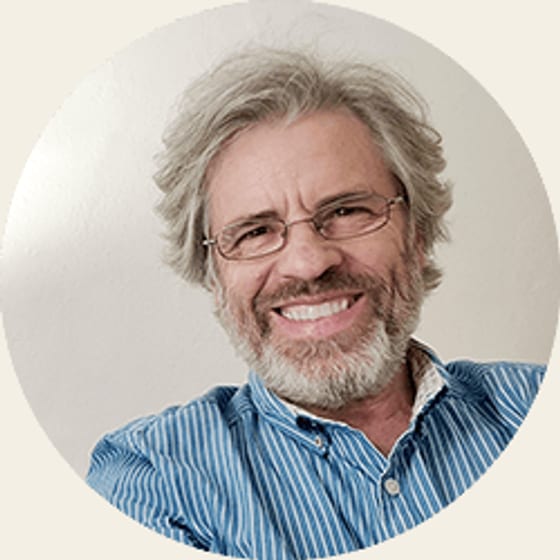
Jorge AmaroPsychologist and psychotherapist, founder and coordinator of Psicovias · OPP licence no. 3076About Jorge Amaro →
Would you like to talk to a psychologist? Book your session on WhatsApp, in Lisbon or online.
Message us on WhatsAppAnxiety, depression or burnout can justify sick leave in Portugal. Find out who can sign you off, how to ask for it and where a psychologist fits…
It is a fair question, because they are different professionals. See what each one does and how to decide where to…

We all have them. When they become frequent and weigh on your daily life, there are ways to question them, and professional help makes a…